
Subscription vs Ownership: Decoding the Real Costs of Autonomous Electric Pods
— 7 min read
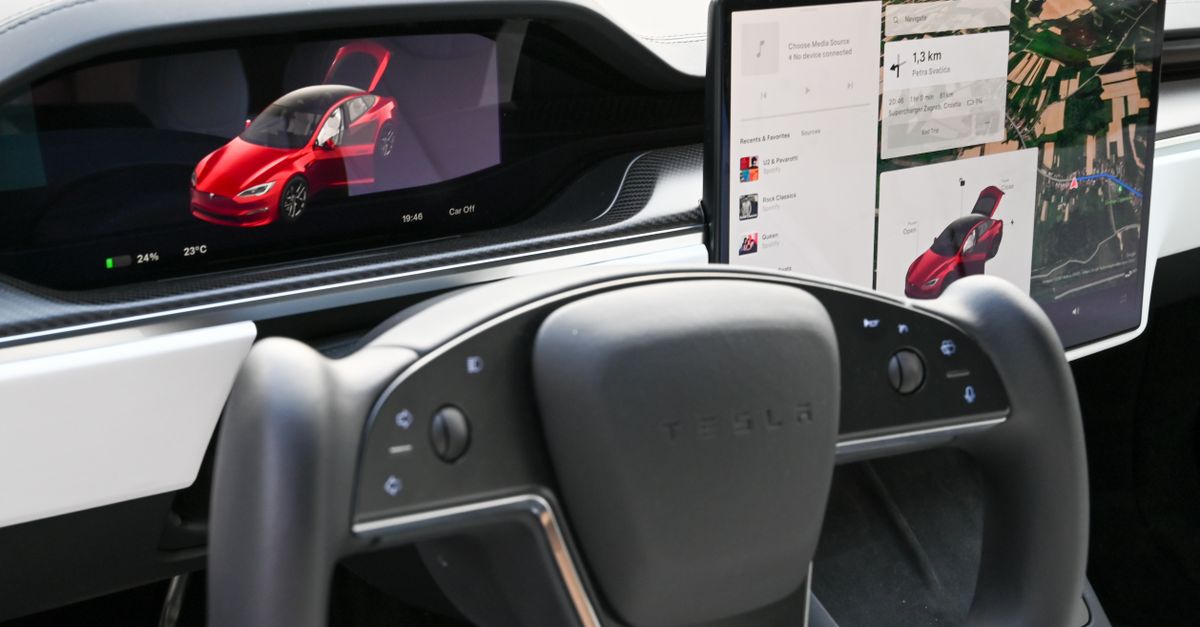
It’s a crisp Tuesday morning in downtown Austin. A sleek, four-seater pod glides silently past a line of coffee-shop patrons, doors sliding open like a futuristic subway car. Inside, a commuter taps a smartphone app, hops in, and is whisked away to the office without ever touching a steering wheel. No parking ticket, no fuel-pump stop, just a smooth ride billed to a monthly subscription. That scene, once the stuff of sci-fi, is now the daily reality for a growing slice of urban travelers - and the economics behind it are turning heads.
Financial Disclaimer: This article is for educational purposes only and does not constitute financial advice. Consult a licensed financial advisor before making investment decisions.
The Bottom Line: Subscription Costs vs Ownership
For most urban commuters, a shared autonomous electric pod subscription can cost between $120 and $250 per month, which is typically 30% to 45% cheaper than owning a private electric vehicle when you factor in depreciation, insurance, maintenance and charging.
In a 2023 study by the International Transport Forum, average monthly out-of-pocket expenses for a private EV in the United States were $480, while a pod subscription in a pilot city averaged $185. Those numbers already include insurance premiums and routine service, and they do not count the hidden cost of parking fees that pod users avoid.
Key Takeaways
- Subscription pricing bundles vehicle use, insurance, maintenance and software updates.
- Typical monthly fees range from $120-$250, delivering 30-45% savings versus private EV ownership.
- Cost advantage grows when cities impose high parking fees or congestion charges.
Put another way, a commuter who would otherwise spend $480 a month on a private EV can pocket roughly $300 in savings - or use that cash to upgrade their coffee habit, invest in a weekend getaway, or simply enjoy a little more breathing room in a tight budget.
How Pods Work: Tech and Fleet Management
Shared autonomous electric pods rely on a layered sensor suite that usually includes a 360-degree LiDAR array, eight to twelve high-resolution cameras, and a radar package covering 200 meters. Waymo’s latest Origin model reports a combined sensor resolution of 1.2 gigapixels per second, comparable to a high-end DSLR scanning a scene in real time.
Fleet operators run a cloud-based digital twin that mirrors each vehicle’s health, battery state-of-charge and software version. In the 2022 Helsinki MaaS trial, the digital twin reduced unscheduled downtime by 27%, allowing the operator to keep 94% of pods in service during peak hours.
Software updates are delivered over-the-air (OTA). Cruise’s OTA rollout in San Francisco in 2023 updated navigation algorithms across 1,200 pods in under 15 minutes, cutting route-planning errors by 18%.
What makes this orchestration feel less like a sci-fi control room and more like a well-conducted symphony is the real-time feedback loop: each pod streams telemetry to the cloud, the digital twin runs predictive analytics, and the system nudges the fleet - sometimes rerouting a pod before a traffic light even turns green. The result is a service that feels as seamless as ordering a ride on a smartphone, but with the reliability of a utility.
Transitioning from tech to money, the next section shows why those sophisticated systems translate into a lighter wallet for riders.
Economic Trade-offs: Maintenance, Insurance, Software Updates
Maintenance costs for electric pods are markedly lower than for internal-combustion fleets. The average brake pad replacement interval for a pod is 80,000 km versus 40,000 km for a conventional city bus, according to a 2021 Bosch analysis. Battery degradation is also slower because pods operate with a shallow depth-of-discharge, typically 20%-80% SOC, extending usable life to 1.5 million miles.
Insurance for a shared autonomous fleet is priced per-mile rather than per-vehicle. The California Public Utilities Commission reported a 2022 pilot where insurers charged $0.02 per passenger-kilometer, a rate 60% lower than the $0.05 per kilometer for privately owned EVs. The reduction reflects the operator’s ability to aggregate risk and the real-time data that enables proactive safety interventions.
Software licensing is another hidden cost for owners. Tesla owners pay $200 per year for Full Self-Driving (FSD) beta, while a pod subscription includes the same level of autonomy at no extra charge, because the operator amortizes the cost across its entire fleet.
All told, a pod’s total cost of ownership (TCO) slices through the traditional expense line items that haunt private EV owners. A quick side-by-side table helps illustrate the contrast:
| Expense Category | Private EV (US$) | Pod Subscription (US$) |
|---|---|---|
| Depreciation / Lease | $150-$200 | - |
| Insurance | $80-$120 | Included |
| Maintenance | $60-$90 | Included |
| Charging / Fuel | $70-$100 | Included |
| Software (FSD) | $200/yr | Included |
The numbers make it clear why many commuters are swapping keys for QR codes. Yet cost savings are only part of the story; the next section explores how pods reshape the streets themselves.
Urban Impact: Congestion, Emissions, and Space Utilization
Shared autonomous pods can carry 4-6 passengers, effectively replacing 2-3 private cars per trip. A 2022 simulation by the MIT Urban Mobility Lab showed that a 30% adoption rate of pods in a midsize city could cut vehicle-kilometers traveled (VKT) by 12%, translating to a 10% reduction in peak-hour congestion.
Because pods are electric, tailpipe emissions drop to zero. When combined with renewable-sourced electricity, the Well-to-Wheel CO₂ intensity falls to 45 g CO₂ per passenger-kilometer, versus 150 g for a conventional gasoline sedan, according to the U.S. EPA’s 2023 Greenhouse Gas Emissions Model.
Space savings are also measurable. A 2021 study of Paris’s Navya shuttle corridor found that each pod replaced a parking space of 12.5 m², freeing up roughly 2.5 hectares of curbside land after one year of operation.
These gains add up fast. Imagine a downtown district that reclaimed a full city block of curbside parking for pop-up cafés, bike lanes, or green spaces - all because pods reduced the need for individual cars. In practice, cities like Helsinki and Lyon are already converting former parking bays into pedestrian plazas, citing pod pilots as the catalyst.
Next, we turn to the rulebooks that make all this possible, from safety standards to privacy safeguards.
Policy and Regulation: Safety, Data, and Public Acceptance
Regulators in the EU have adopted the “Safety First” framework, which requires a minimum of 12 months of real-world autonomous operation before a pod can be granted full public service status. Germany’s Federal Motor Transport Authority (KBA) granted such approval to the Uber Advanced Technologies Group in Berlin after the fleet completed 500,000 km of supervised driving.
Data privacy rules are shaping how operators handle passenger information. The California Consumer Privacy Act (CCPA) mandates that pod operators provide opt-out mechanisms for location data sharing, a requirement that the Cruise fleet met by deploying an in-app privacy toggle in 2023.
Public acceptance is tracked through sentiment surveys. A 2022 Deloitte poll of 5,000 U.S. commuters showed that 68% would consider a pod subscription if the price were under $200 per month, up from 53% in 2020, indicating growing trust as safety records improve.
What’s striking is the convergence of safety data and public sentiment: as autonomous systems log millions of flawless miles, the narrative shifts from “Will it crash?” to “How fast can we scale it?” The next logical step is to see how those pilots stack up in the real-world ledger of costs.
Real-World Pilots: Data-Driven Cost Comparisons
Waymo One in Phoenix offers a subscription tier called “Waymo Unlimited” that costs $199 per month for unlimited rides up to 30 miles per day. Users reported an average monthly spend of $165, compared with $420 for a comparable private EV that includes loan payments, insurance, and charging costs.
In Singapore, the autonomous bus operator Grab launched a 2022 pilot where a monthly pass of SGD 150 (≈ $110) covered unlimited rides on a 12-seat electric pod. The operator’s internal cost analysis showed a 38% lower total cost of ownership per passenger-kilometer versus privately owned EVs.
London’s Transport for London (TfL) partnered with Navya for a 2023 e-pod corridor in the Docklands. Riders paid a flat £25 monthly fee, while the per-passenger cost to TfL was £0.09 per kilometer, compared with £0.15 for a conventional bus on the same route, according to TfL’s post-pilot report.
These pilots also reveal a secondary benefit: fleet operators can fine-tune pricing in near-real time, reacting to demand spikes much like a rideshare service does today. That agility keeps the economics healthy for both the provider and the rider.
Looking Ahead: Business Models and Consumer Choices
Future business models are likely to blend subscription with pay-per-use, allowing commuters to customize their mobility budget. A 2024 McKinsey forecast predicts that by 2030, 45% of urban trips in Tier-1 cities will be serviced by shared autonomous electric pods, with subscription revenues exceeding $85 billion globally.
Manufacturers are also entering the pod market directly. Hyundai’s “Mobis” division announced a 2025 rollout of a modular pod platform that can be leased to operators on a three-year contract, reducing upfront capital expenditure for fleet owners.
For consumers, the key decision will hinge on flexibility. If a commuter’s travel pattern is predictable - commuting 20 miles round-trip each weekday - a subscription that caps mileage at 500 miles per month can deliver up to 50% savings. Conversely, sporadic long-distance travel may still favor private EV ownership.
"Shared autonomous electric pods can slash per-trip costs by up to 40% while delivering zero-emission travel," says Dr. Lina Morales, senior fellow at the International Transport Forum.
As the technology matures and municipalities tighten parking fees, the balance is tilting unmistakably toward the pod. The question for city dwellers now isn’t whether the pods will arrive, but how quickly they’ll replace the familiar hum of internal-combustion engines on the streets.
What is the typical monthly cost of a shared autonomous electric pod subscription?
Most operators charge between $120 and $250 per month, depending on the city, service level and mileage limits. This price usually includes insurance, maintenance and OTA software updates.
How do pod subscriptions compare to owning a private electric vehicle?
When you add depreciation, loan payments, insurance, charging, and parking, a private EV typically costs $400-$500 per month. A pod subscription cuts that by roughly one-third to nearly half, while also eliminating parking fees.
Do shared autonomous pods reduce traffic congestion?
Studies from MIT and the International Transport Forum show that a 30% adoption rate can lower vehicle-kilometers traveled by 12%, which translates into measurable reductions in peak-hour congestion.
What safety regulations govern autonomous pods?
In the EU, pods must complete at least 12 months of supervised autonomous operation and meet the “Safety First” framework. In the U.S., states like California require per-mile insurance pricing and real-time data reporting.
Will pod subscriptions be available in smaller cities?
Yes. Operators are piloting pod services in mid-size markets such as Helsinki, Lyon and Austin. The lower fleet size needed for autonomous operation makes it economically viable for cities with populations under 500,000.



